Autonomous boat design
Redesigning survey vessels for mass production
Industrial design

Solution & Impact
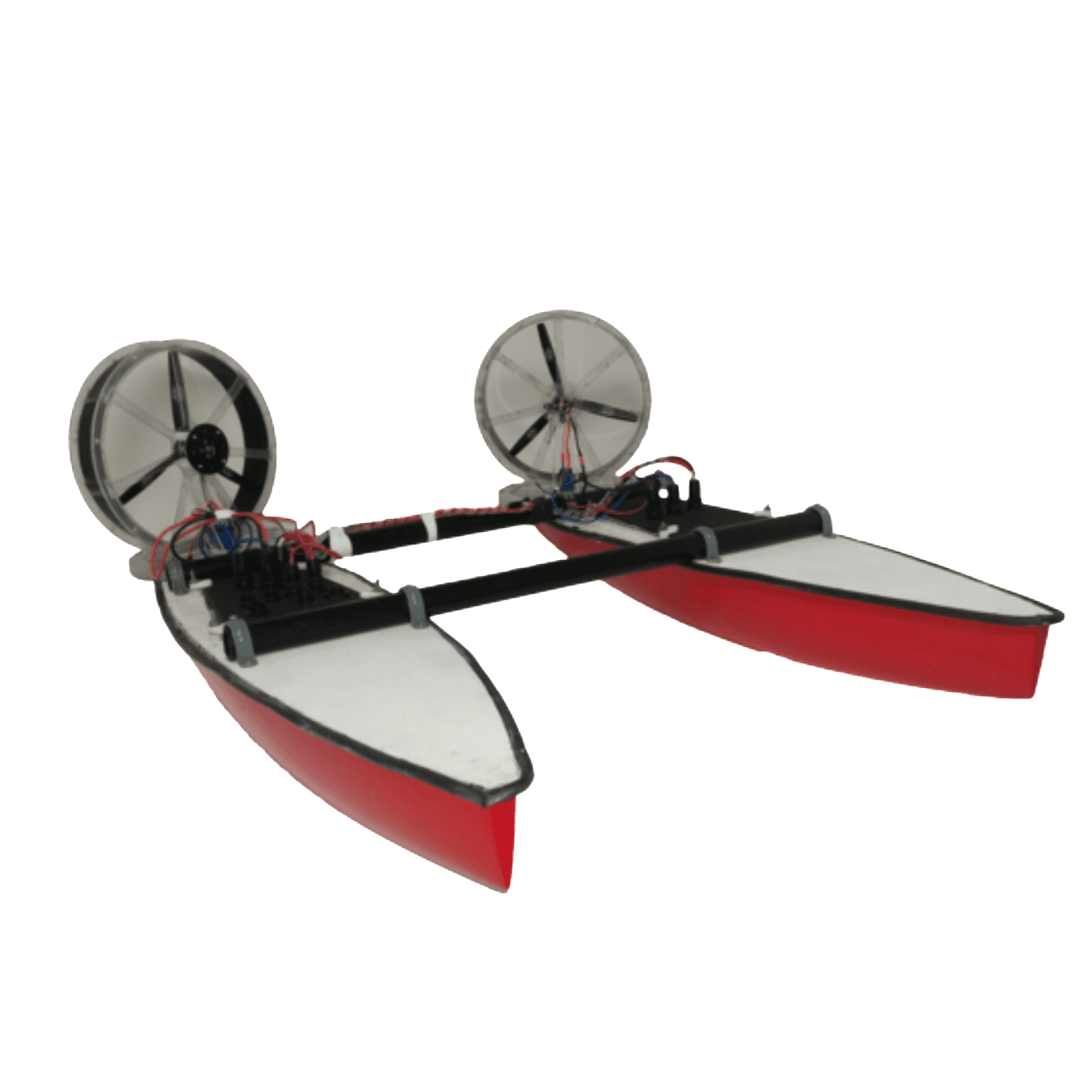
Led the end-to-end redesign of three vessel hulls, transitioning the fleet to mass production by engineering a standardized, rotomolded body, accelerating production timelines by reducing manual assembly.
Role
Lead industrial designer
Duration
2 months
Company
Platypus LLC
Skills
CAD
Design for Manufacturing (DFM)
Sourcing & COTS integration
Structural ergonomics
Tools
Autodesk Fusion 360
"How might we transform a bespoke, hand-assembled robotic vessel into a mass-manufacturable hardware platform without losing deployment flexibility?"
Complex manufacturing
Hand-crafted assembly lines limited production volume, drove up unit costs, and introduced weaknesses in the vessel integrity.
High tooling stakes
Moving to rotomolding required expensive, irreversible tooling molds with zero margin for prototyping errors.
Component fragmentation
Accommodating various third-party marine sensors required custom engineering for every single client.

2
Modeling & benchmarking
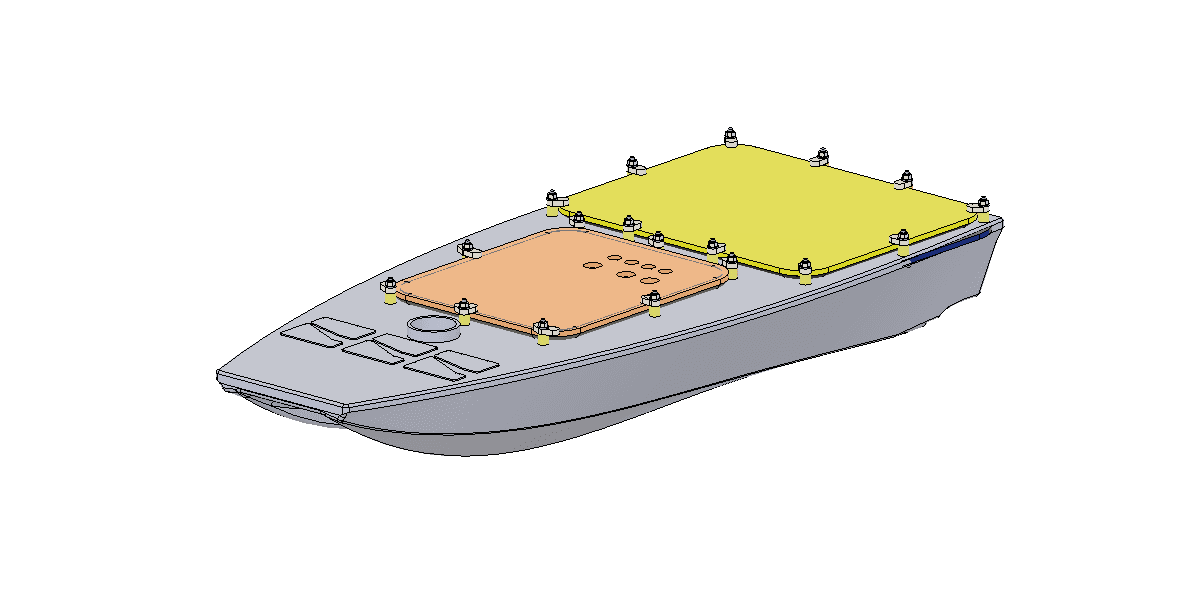
CAD: I modeled the three hollow vessels, optimized for rotomolding, that could accommodate various internal and external sensors. I included built-in, prefabricated mounting points, allowing the standardized boats to host a wide array of specialized sensors natively without secondary post-mold drilling.
Benchmarking: Since the new vessels would be hollow plastic, ensuring structural integrity was paramount. I conducted research into modern kayak production to benchmark optimal wall-thickness variables and stress-bearing geometries.

Solution
From hand made hulls to modular manufacturing
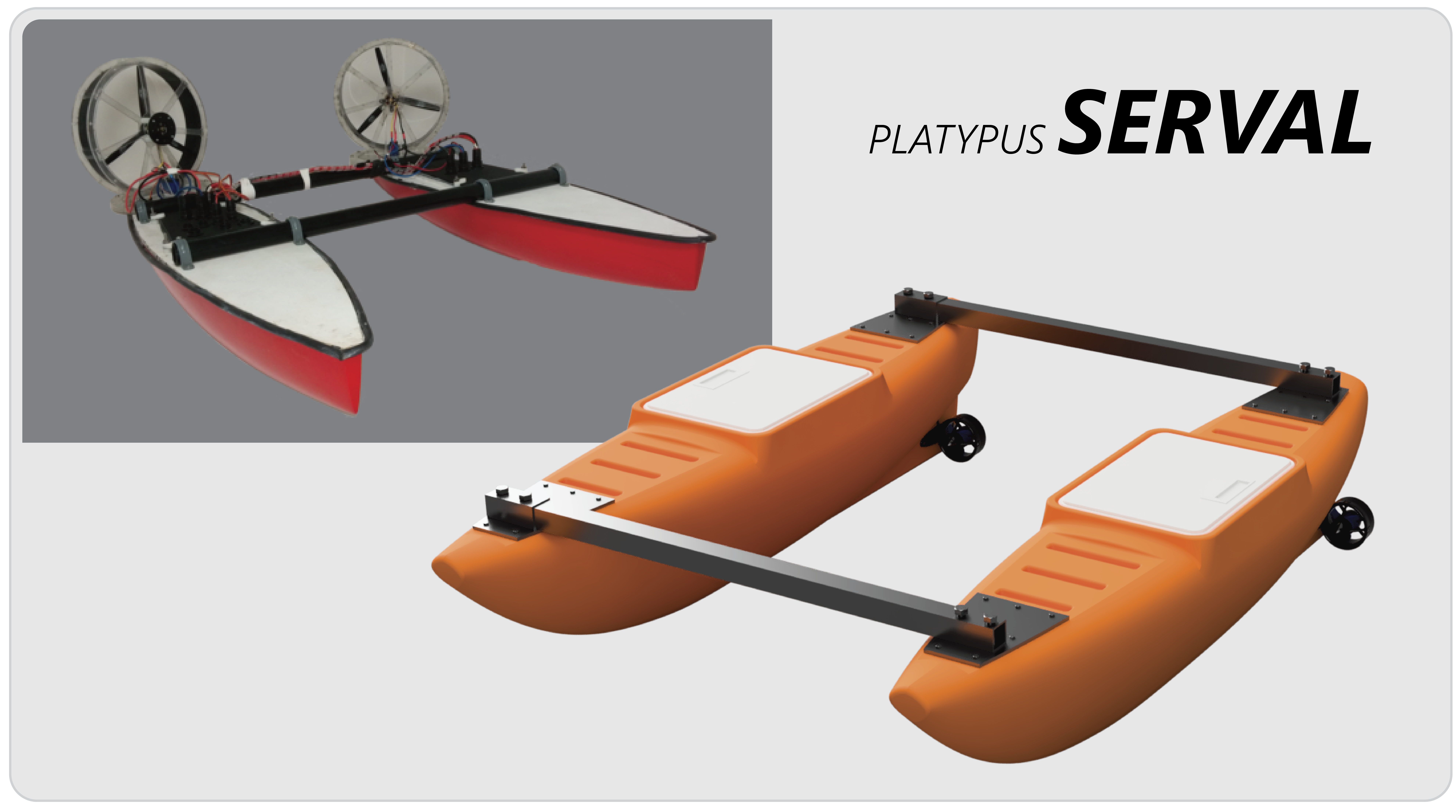
Unification: Redesigned all three boat sizes under a cohesive design language with integrated logo, optimizing each for the realities of industrial rotomolding while cutting assembly steps.
Modular design: Designed the hulls to host both custom and off-the-shelf components and hardware, both internally and externally, allowing for flexible but easier assembly.
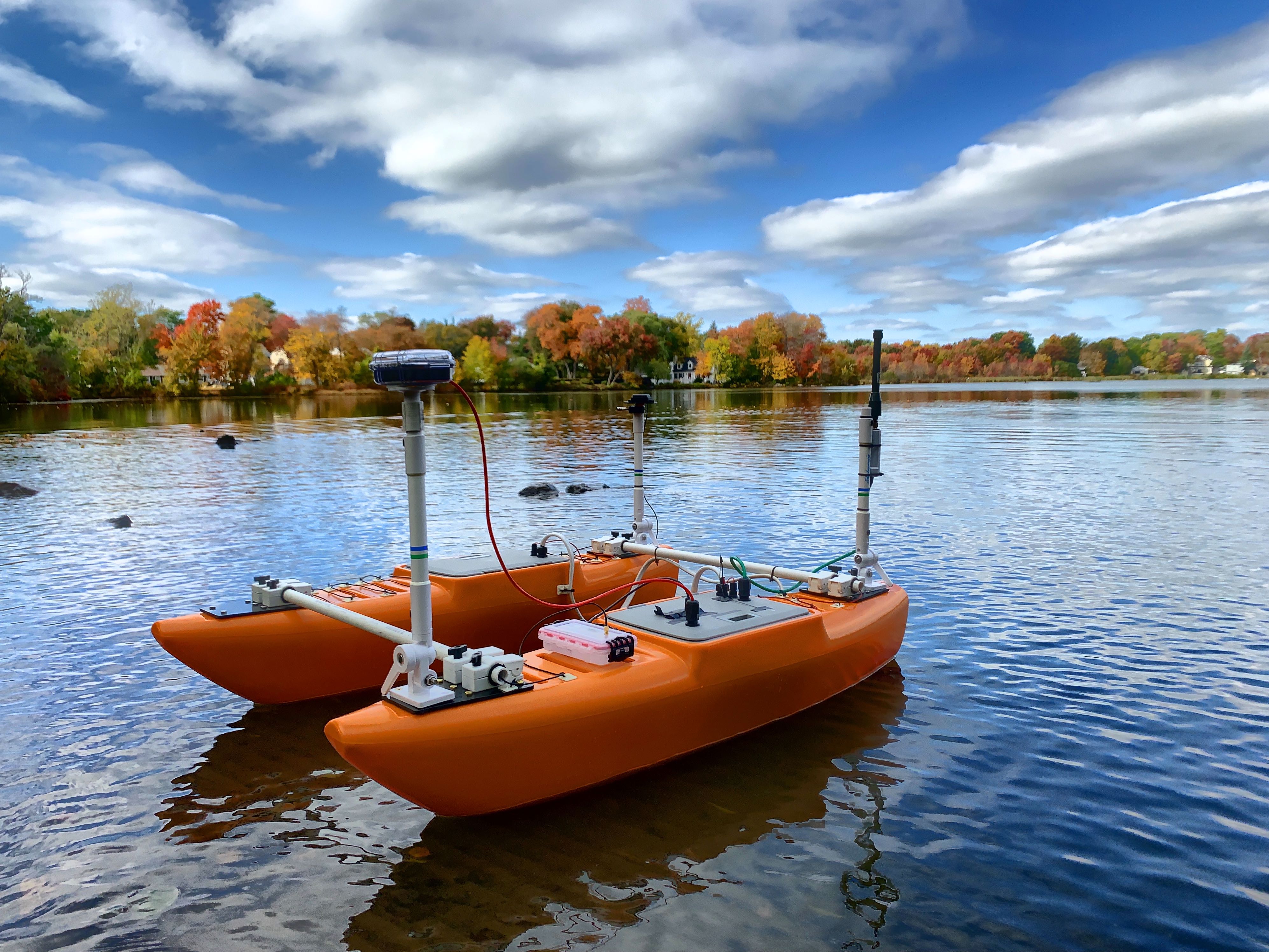
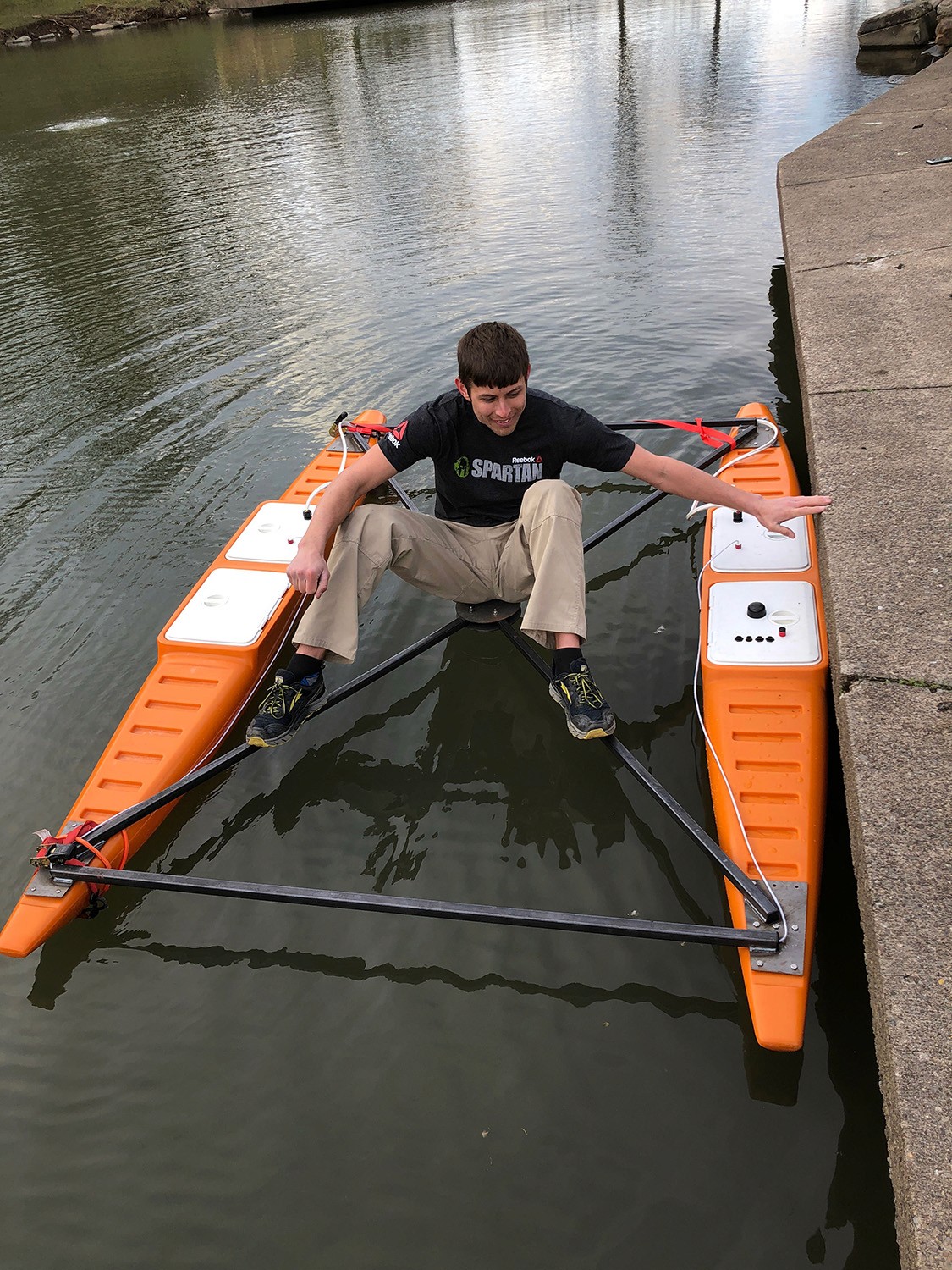
Structural integrity: Strategic structural ribbing added during the digital modeling phase allowed the hollow plastic hulls to withstand harsh field operations. The largest catamaran model proved rigid enough to comfortably support human weight.
Deployment: On-the-water validation confirmed that the standardized hull dynamics performed as expected.


Were the challenges met?
Complex manufacturing
Manufacturing and assembly was simplified by transforming a multi-part hull into a single molded product that was compatible with off the shelf components, yet customizable.
High tooling stakes
By modeling the boats closely to the original designs, verifying the buoyancy, using standardized parts, and working closely with the manufacturers, risk was reduced.
Component fragmentation
Designed the hulls within the "sweet spot" with a mix of off-the-shelf components, such as the hatches and propellers, while leaving dedicated real estate for custom assemblies.
Reflections
My role: Served as the sole end-to-end product designer.
What went well
DFM mindset: Designing around kayak manufacturing methodologies and standard COTS parts eliminated dozens of downstream production hurdles and dramatically dropped assembly times.
Proactive collaboration: Partnering early with local manufacturers and cross-disciplinary engineers de-risked the high financial stakes of rotomold tooling, guaranteeing a successful first-run production.