Dashboard design
Circularity Gap Report > Dashboard
digital, accessibility, systems
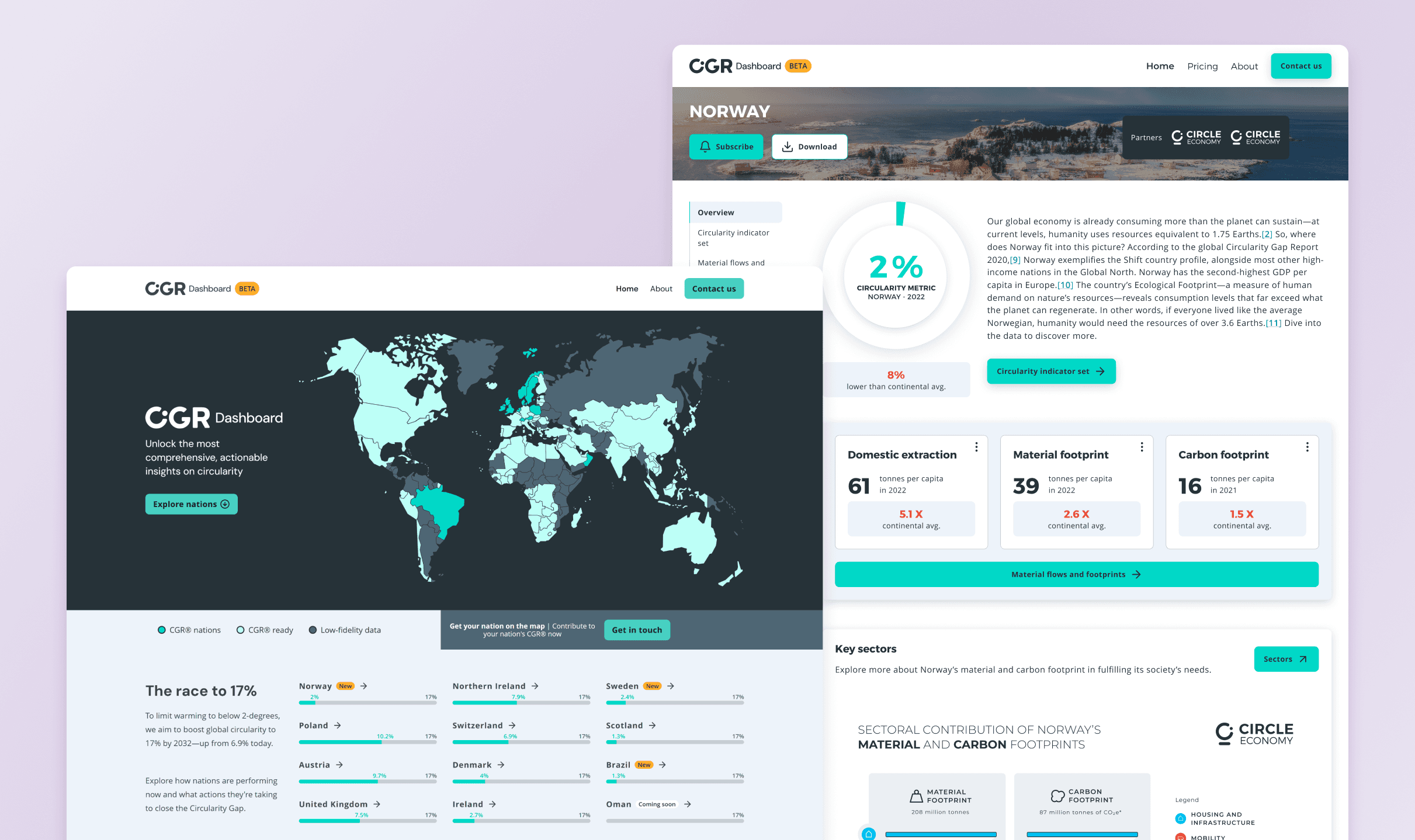
Solution & Impact
Lowered production timelines and publication costs via a reusable Strapi CMS template, unlocked the organization's first-ever reader behavioral analytics, and transformed static data into actionable insights.
Role
Lead product designer
Duration
2 months, 2025
Company
Circle Economy Foundation
Team members
Sophia Chou (product designer)
James Yan Aung (product manager)
Isfaaq Goomany (dev lead)
Wazeer Chadun (full stack developer)
Mahima Ramgolam (front end developer)
Skills
User research
UX/UI
Product management
Accessibility
Design system
Tools
Figma
Miro
"How might we transform a dense, text-heavy academic publication into a streamlined digital product that drives engagement, allows us to monitor usage, and reduces our resource input?"
Overambitious scope
Leadership expected an interactive global map and dashboards for dozens of countries in 6 weeks—an unrealistic timeline for a small team.
Cognitive overload
Heavy academic research text risked exhausting users with infinite "walls of text" if translated directly to digital screens.
Hidden insights
Static charts in the PDF lacked user explorability and data deep-dives, while the internal team had zero analytics on reader behavior.
Process
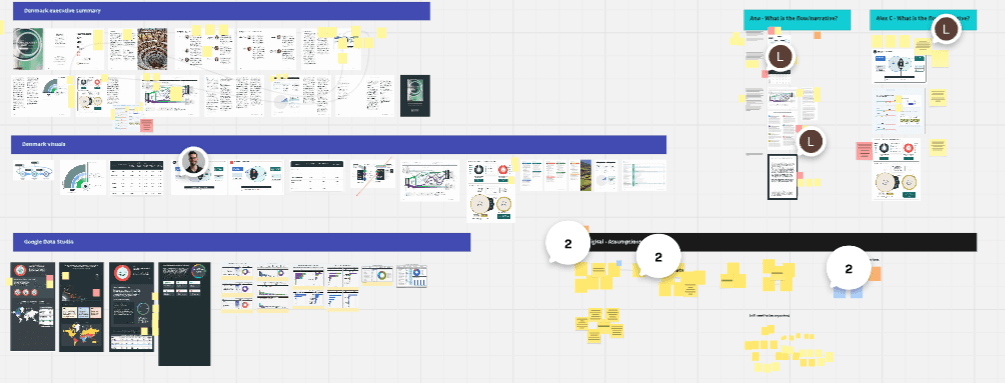
2
Blueprint & MVP launch
Digestible pacing: Designed structural wireframes utilizing an "At a Glance" landing page and breaking deep narrative text into separate, distinct chapter tabs.
Simple interactions: Kept complex visualizations static for the initial launch but surrounded them with "Data Cards"—high-level metric summaries that compared local data to global baselines.


Solution
Dashboard overview
"At-a-glance": Designed a dedicated overview landing page acting as a macro-summary of the report's major data points, keeping casual readers engaged.
Fast navigation: Created an intuitive starting point that allows power users to jump directly to specific sub-sections or chapters of interest.

Structured navigation
Cognitive rest: Broke the endless scroll into clean, digestible chapters interspersed with relevant visuals, charts, and regional case studies to prevent user fatigue.
Flexible exploration: Allowed professional researchers to pivot seamlessly through the dense report structure without losing their place.

Cross-filtered interaction
Coordinated charts: Coordinated syntax rules for the data science team so that clicking a specific sector automatically updates all adjacent charts.
Data deep-dives: Empowered users to explore complex data relationships instantly without losing the core narrative context.

Learning by example
Dynamic real-life examples: Engineered an in-platform integration framework that bridges quantitative data with real-world circular solutions by dynamically pulling local case studies based on the region being explored (e.g., Norway's waste management).

Were the challenges met?
Overambitious scope
Cognitive overload
Hidden insights
Reflections
Owned the end-to-end design lifecycle for the MVP before onboarding a junior designer for the next iteration. Led data/visual audits, drove scope-negotiation with the PM, created the UI system, and defined interaction behaviors for the data engineering team.
What went well
Data-driven pragmatism: Dropped mobile responsiveness and tooltips for launch after analytics showed 80% of traffic came from desktop research users. This allowed us to perfect the core experience within 6 weeks.