Assessment platform redesign
Circularity Assessment Tool revamp
Digital product
Sustainability
Workshops


Solution & Impact
Transformed a generic "Google Form" experience into a more trusted digital platform capable of swapping assessment frameworks via a headless CMS while bridging user learning with real-world case studies.
Role
Lead product designer
Duration
2 months, 2022
Company
Circle Economy Foundation
Team members
Lou Tamaehu-Plovier (product manager)
RB2 (development team)
Skills
Workshop facilitation
UX
UI
Data visualization
Design system
Tools
Miro
Figma
"How might we transform a generic, outdated assessment into a sleek, professional tool that provides immediate strategic value, while acting as a modular engine for various industry frameworks?"
Weak brand trust
The original layout felt like a generic, cheap form, failing to project the professional credibility required by business stakeholders.
Information gaps
Users struggled to comprehend abstract circular economy principles and their business application, while assessors struggled to interpret results.
Limited architecture
Assessments were bespoke and failed to accommodate different circularity frameworks and assessment levels.
The process


2
Client focus groups
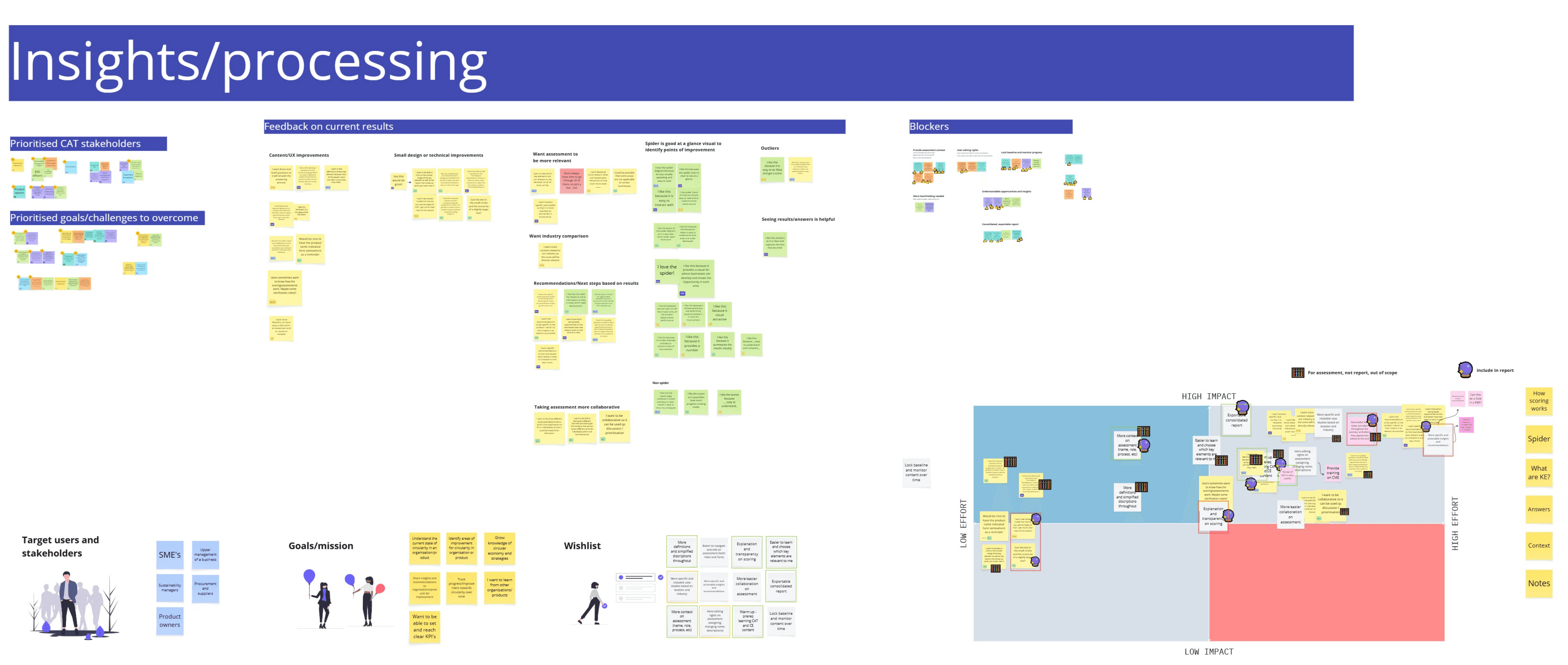
Needs discovery: Facilitated structured workshops with active platform B2B clients to extract real-world operational bottlenecks and day-to-day user challenges.
Co-creation: Ran rapid concept-review sessions to map out service delivery patterns and gain immediate, qualitative validation on concepts.
Workshop results:
Clarified target users and stakeholders: Confirmed the core audience segment as SMEs, Innovation/Sustainability Managers, Product Owners, and Procurement/Supply Chain leads.
Confirmed assessment objectives: Identify circular opportunities, track sustainability progress, and establish standardized circular KPIs across teams.
Established feature wishlist: Prioritized the inclusion of automated reporting tools, clear data benchmarking against peers, and data-driven decision frameworks to drive long-term engagement.
The end result
Refined UI/UX
Professionalized: Developed a more aligned and professional branding identity for the platform to replace the legacy "Google Form" feel.
Spider visualization: Improved the sunburst-style "Spider" graphic based on user input to provide clear, immediate feedback on maturity scores ranging from 0–100, utilizing the visual as both an entry point into the assessment and its results.
Comparisons: Created an enhanced overview of company results-comparison alongside additional product-level comparison metrics within each individual company.

Flexible frameworks
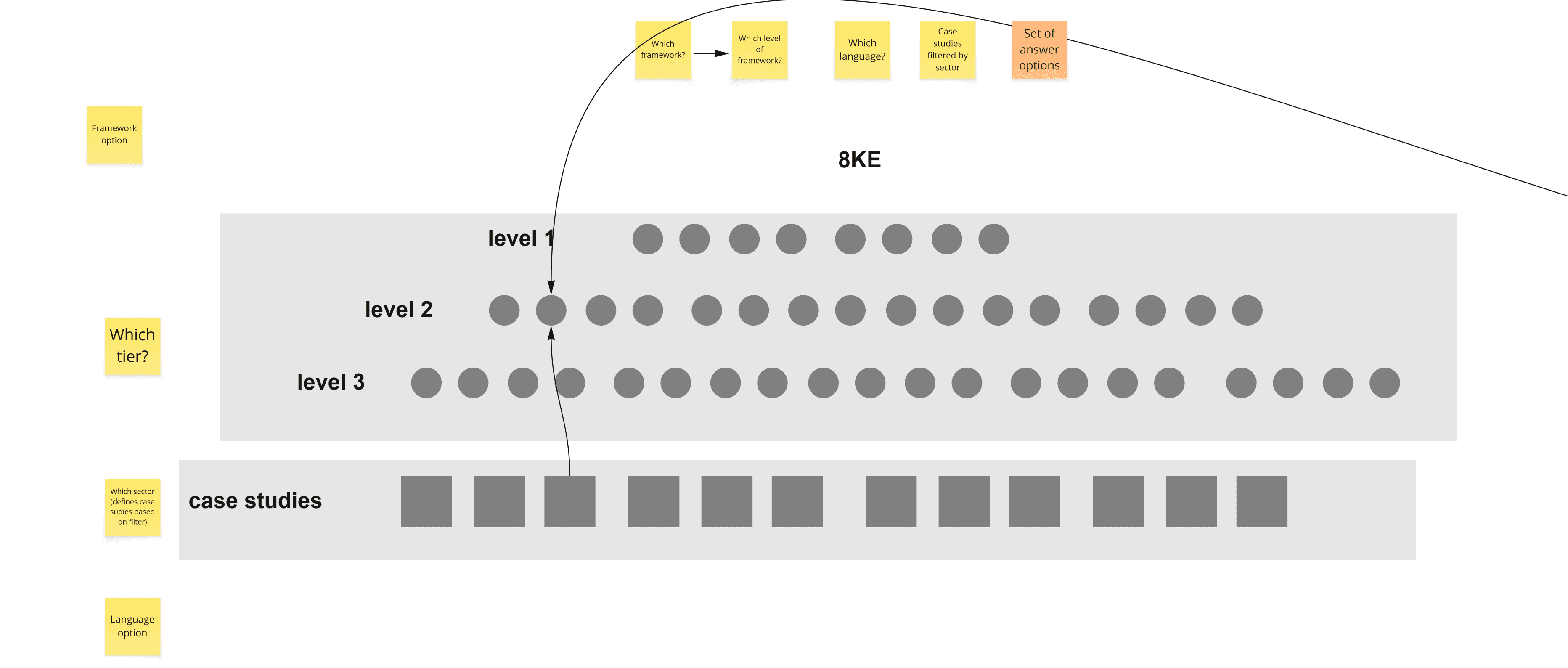
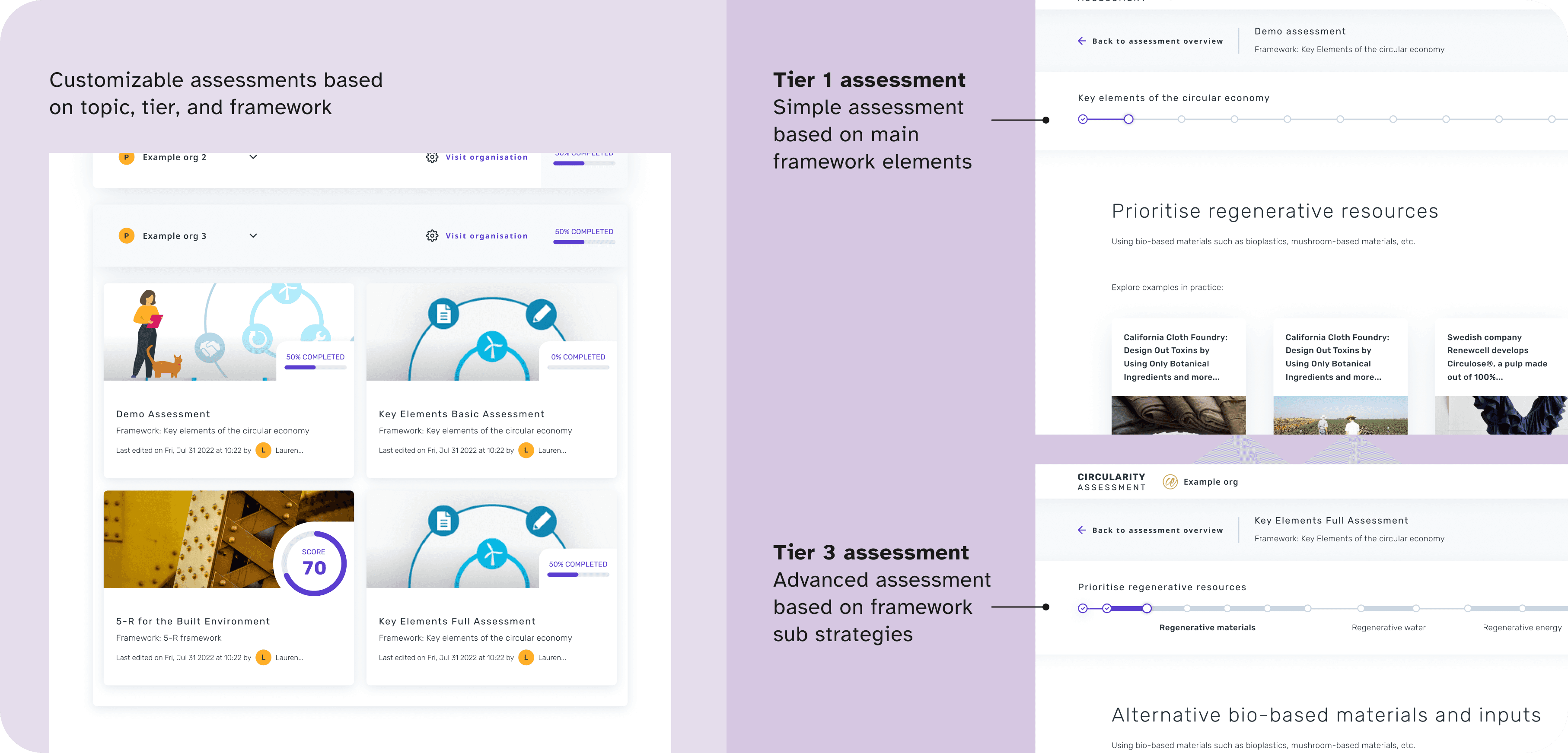
CMS Integration: Connected the assessment engine to a backend CMS where custom frameworks can be seamlessly added and assessment tiers defined to provide basic or advanced evaluations.
Flexible UI: Designed the front-end interface specifically as a flexible framework capable of dynamically accommodating various types of assessments.
Connected case studies
To better understand the circular principles being assessed and identify opportunities, examples of circular implementations were provided directly from within the platform via Circle Economy's circular case study database (Knowledge Hub).

Enhanced reporting
One of the biggest prior painpoints was that clients had to do product custom reports for clients post-assessment. So, concepts were created for more visual and annotatable results that would be generated directly within the platform. However, full automation and delivery was not completed due to a shift in organizational priorities.

Were the challenges met?
Weak brand trust
Elevated the UI and experience to a more professional and business-worthy level.
Information gaps
Introduced circular strategies incrementally and supported them with real life business examples, with improved reporting.
Limited architecture
Built an architecture that supports multiple assessment tiers (Basic vs. Advanced), industry relevancy, and various circularity frameworks.
Reflections
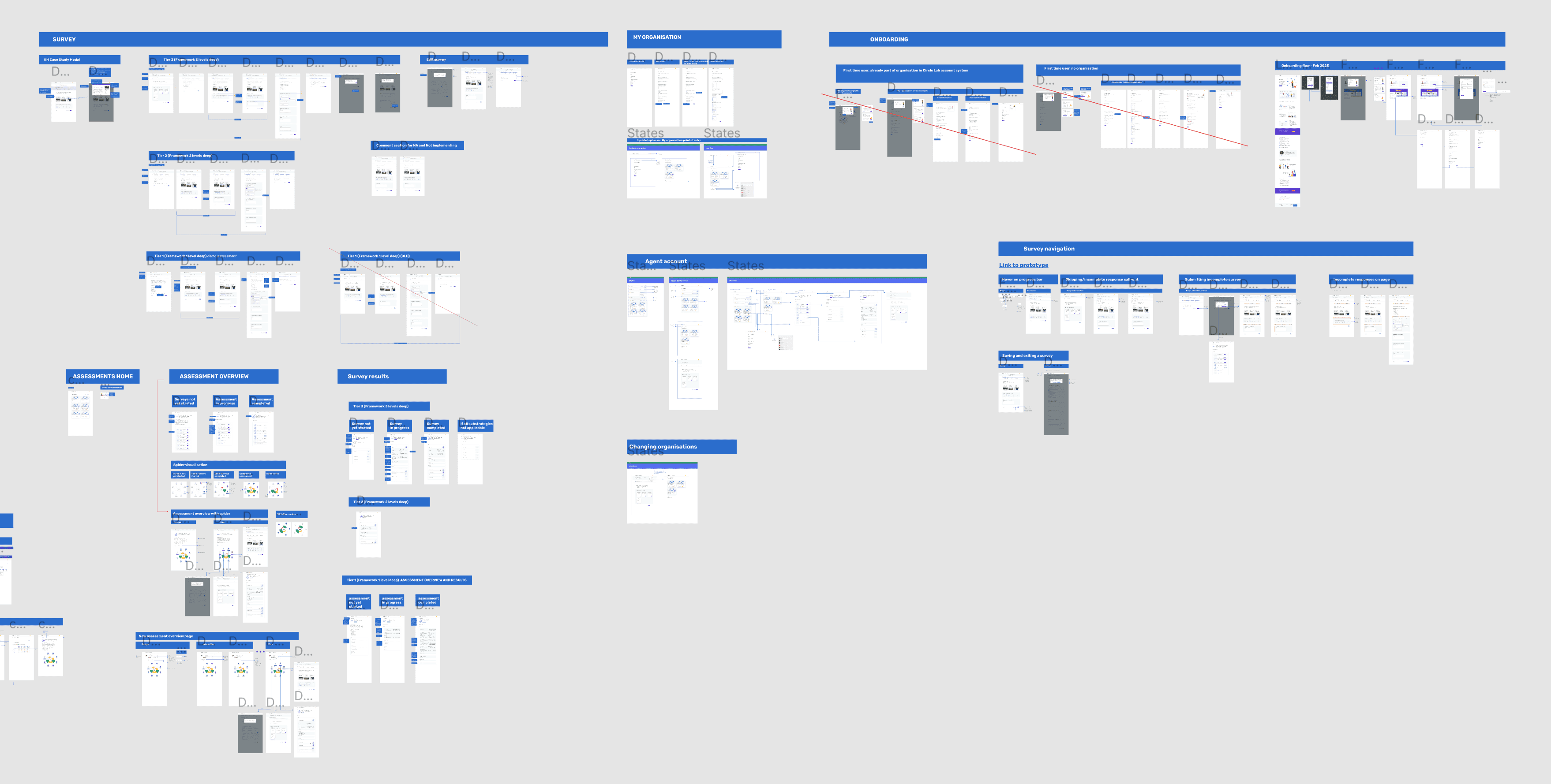
Served as the sole end-to-end designer on this project. Facilitated client workshops, defined the new visual identity, delivered the design and prototypes, and supervised the dev handoff.
What went well
PM/Designer collaboration: Learned the value of a good designer/PM relationship. Had near constant communication with the PM throughout all phases of the project and remained very aligned — while trusting each other independently with our respective roles.
Workshop facilitation: I really enjoyed running the workshops, and got great feedback on participant engagement.